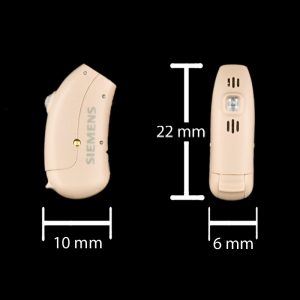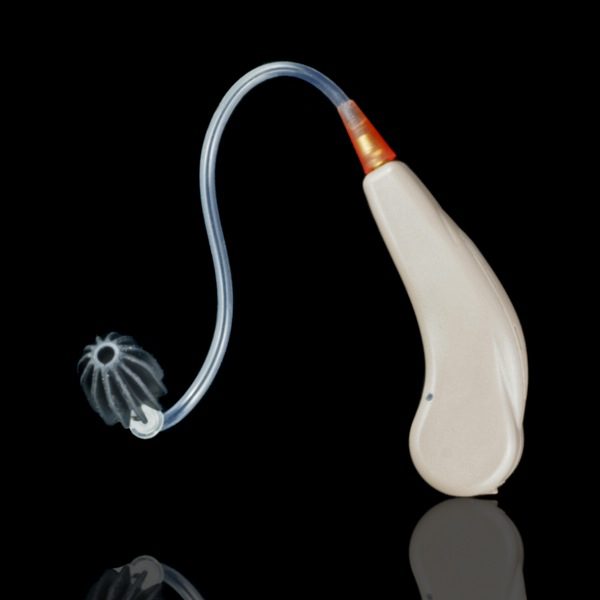
Starkey Destiny 1200 Hearing Aids

Ready to purchase or have questions? Call 1-800-301-3137
Clearer Hearing Through Better Science
When hearing aids went digital, having been mostly analog (first simply acoustic and then analog electric since the 1920s), a revolution in hearing aids occurred. Suddenly - and improving each year since - manufacturers of hearing aids can now program aids to improve on those areas needed, not just make everything, including background noise, louder.
Digital makes only those things you want to hear louder and clearer.
Starkey has been on the leading edge of expanding digital technology. Their landmark nFusion processors cut a swath for many newer digital hearing aids and retains its place as a great breakthrough - and still a great hearing aid for those who need more than simply making everything louder.
The Starkey Destiny 1200 OTE (Over-The-Ear) model allows the listener to hear sound far more naturally than with previous analog hearing aids. Feedback (squealing) is more easily controlled. Different settings can be programmed for different hearing environments, such as going from a loud restaurant to a quiet aperitif. And switching between programs can be done with the touch of a button (and even newer models can use remotes or change programs automatically based on your preferences).
With digital technology you can pick what you want to hear the most - such as voices - and screen out what you do not want - such as large crowds.
For more technical and lifestyle information about hearing aids click here to view our General Information page.
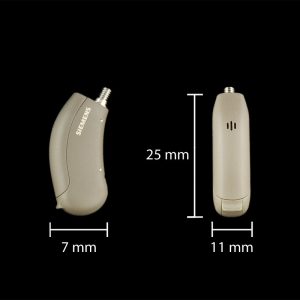
Specifications
|
Digital
The two most common technologies used in hearing aids are analog and digital. Digital is newer and considered to be much more flexible, capable of doing more operations, and the only technology used in modern hearing aids. |
Yes |
|---|---|
| Open Fit Type | Call for Info. |
|
Channels
Human speech ranges in frequencies roughly from 250 to 6000 Hz. Hearing aids are built so that this group of frequencies (250 to 6000 Hz) is divided into smaller groups, called bands or channels. |
8 |
|
Memories
Multiple memory settings can be programmed into the aid to give the user the ability to cope with changing sound and noise environments with the push of a button. |
Call for Info. |
| Technology Level | Call for Info. |
|
Volume Control
Volume control is generally considered to be a manual adjustment that the user can control. All hearing aids have automatic gain control designed to make soft sounds audible and loud sounds tolerable. This is done automatically within limits programmed into the device. |
Call for Info. |
|
On-Board Control Type
Controls on hearing aids usually have one or more of: 1. A momentary button used to change from one memory to the next 2. A button used to increase the level of volume 3. A rocker switch where pushing on one end does one function while the other end does another function 4. A wheel that will control volume |
Call for Info. |
|
Remote Control Available
Remote controls for hearing aids are small enough to comfortably fit in a pocket. A remote control will enable more functions than can be put on a hearing aid itself. |
No |
|
Directional Microphones
Microphones are the electronic component that picks up sound. Microphones are very small and can be made to pick up more sound in one direction than all others. This is called a directional microphone. |
No |
|
Noise Reduction
Technology to separate voices from other sounds is continuously being improved. Each manufacturer has a patented process and trademarked name for noise reduction. |
Yes |
|
Sudden Noise Protection
This feature helps make hearing aids acoustically comfortable by dampening sudden loud noises, such as a dropped dish. |
No |
|
Wind Noise Protection
Wind noise is an important feature for those that spend time in the outdoors by reducing the roar of wind across the microphone. This feature is improving but is not effective in gusty wind conditions. |
Call for Info. |
|
Feedback Management
Acoustic Feedback, is also known as squealing, buzzing, 'your aids are talking to you', etc. |
Yes |
|
Telecoil
Telecoils help with telephones that are rated hearing aid compatible. |
Call for Info. |
|
Aid-to-Aid Communication
Communication from one hearing aid to the other is a very low strength signal designed to keep both hearing aids operating in the same mode at the same volume. |
Call for Info. |
|
Bluetooth Capable
Being able to couple your hearing aids with a BlueTooth-enabled device, such as a cell phone, allows phone conversations to be heard through your hearing aids. |
Call for Info. |
|
Direct Audio Input (DAI)
DAI is only on Large and Full Size hearing aids due to the need for terminals on the outside of the case. Using DAI allows other devices to connect directly to the hearing aids and input their audio signal. |
Call for Info. |
|
Battery Size/Color
Conventional Hearing Aid Batteries cost less than a dollar per battery and are very easy to change. |
312 (Brown) |
| Warranty | 1 year |
| Loss/Damage Warranty | 1 year |
Features
- Active Feedback Intercept (AFI):
- Removes whistling and other aggravating feedback sounds efficiently
- Directional Speech Detector (DSD):
- Consistently adjusts to your environment & concentrates on speech while reducing background noise
- Automatic Telephone Response:
- Adapts automatically & removes feedback to produce the best possible phone communication
- Acoustic Signature:
- Perceives various sound environments and eradicates the need for manual modification by automatically adjusting to an optimum setting